
Frozen Shoulder
August 21, 2026
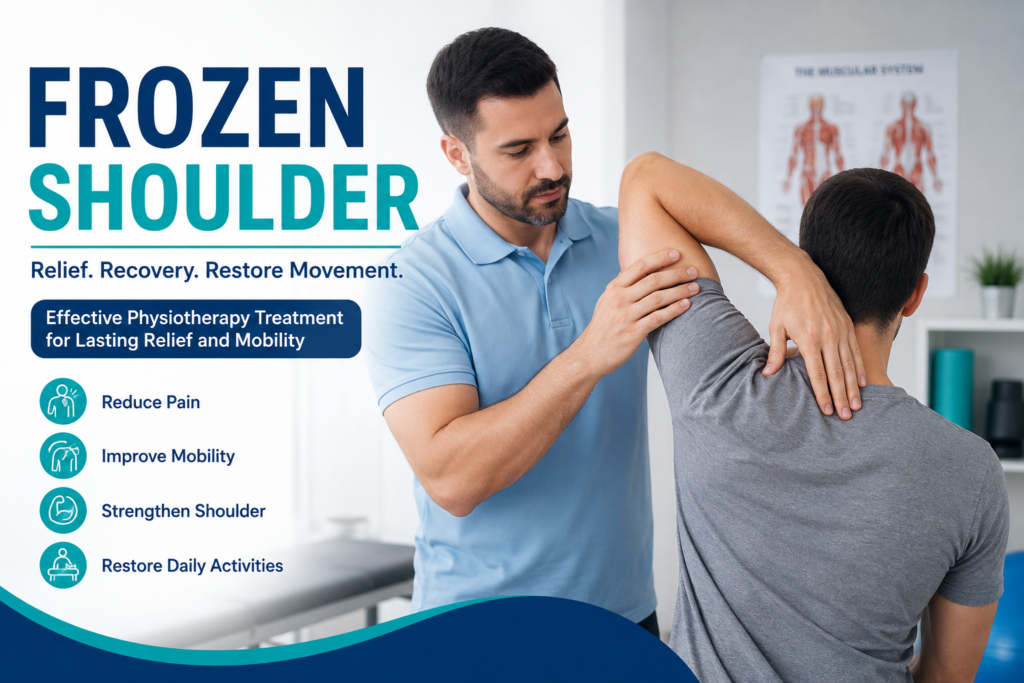
Understanding the Condition and the Role of Physiotherapy in Treatment of frozen shoulder
Frozen shoulder, also known as adhesive capsulitis, is a common condition that causes pain, stiffness, and reduced movement in the shoulder joint.
If you’ve ever tried to comb your hair and felt a sharp pain in your shoulder… or struggled to wear a shirt… you might be dealing with frozen shoulder.
Well the condition can improve over time, proper treatment and physiotherapy can reduce pain and help to restore normal shoulder movement.
What Is Frozen Shoulder?
Your shoulder joint is covered by a thin capsule. In frozen shoulder, that capsule gets inflamed, thickens up, and basically shrinks.
Think of it like a balloon that’s lost its air. There’s just less space for the joint to move. That’s why it hurts and feels so stiff.
During clinics I have seen people with Frozen shoulder most commonly between 40 and 60 years of age and is more common in women. People with diabetes, thyroid disorders, prolonged shoulder immobilization, or previous shoulder injuries may have a higher risk of developing this condition.
Common Symptoms
The symptoms of frozen shoulder usually appear gradually and worsen over time. Common signs include:
- Persistent shoulder pain
- Difficulty lifting the arm
- Stiffness in the shoulder joint
- Pain that becomes worse at night
- Difficulty reaching behind the back
- Reduced range of motion during daily activities
- Weakness due to decreased use of the shoulder
Many patients initially think they have a simple shoulder strain, but the stiffness continues to increase over several months.
Stages of Frozen Shoulder
Frozen shoulder generally progresses through three stages:
1. Freezing Stage
This is the painful stage. Shoulder pain gradually increases, especially during movement and at night. The range of motion starts decreasing as the shoulder becomes stiffer. This phase may last several months.
2. Frozen Stage
Pain may begin to decrease, but stiffness becomes the main problem. Daily activities become difficult because shoulder movement is significantly limited.
3. Thawing Stage
During this stage, pain gradually reduces and shoulder movement slowly returns. Recovery can take several months to a few years depending on the individual and treatment approach.
Causes of Frozen Shoulder
I don’t understand the exact cause which is not always clear. However, I noticed some factors may contribute to its development:
- Diabetes mellitus
- Thyroid disorders
- Shoulder injuries
- Rotator cuff problems
- Prolonged immobilization after surgery or fracture
- Previous shoulder inflammation
- Certain neurological or systemic conditions
Sometimes frozen shoulder develops without any obvious reason.
How Is Frozen Shoulder Diagnosed?
We can diagnose frozen shoulder through detailed medical history and a proper physical examination by physiotherapist by assessing the active and passive shoulder movement of a patient. We can also diagnosed by x-ray and MRI when we need to rule out other shoulder conditions
Medical Management
Doctors may recommend some pain relieving medication also anti inflammatory medication sometime cortico steroid injection and some of the doctors even suggest heat or a cold therapy but if the condition is severe then in such cases surgical intervention is also recommended
Medication can help with pain. Injections can help too. But in my experience, physiotherapy is what actually gets your shoulder moving again. Which helps to regain your range of motion.
Most patients improve without surgery when treated appropriately.
The Role of Physiotherapy
Physiotherapy is considered one of the most important treatments for frozen shoulder.
Before starting a Physiotherapy treatment I always make a design of a treatment plan according to the stage of condition of a patient and his/her symptoms
According to my experience the main Physiotherapy Goals is first to reduce pain than to work on improving shoulder mobility also restore normal functioning.
Then the last goal is to prevent muscle weakness for improving quality of life.
Physiotherapy Interventions
1. Patient Education
Patients are educated about the condition, recovery timeline, posture, and activity modifications to avoid worsening symptoms.
2. Pain Management
Pain management according to a Physiotherapy treatment protocol a physiotherapist may use heat therapy or a cool therapy . TENS (Transcutaneous Electrical Nerve Stimulation) or a Physiotherapy Ultrasound in some cases
Starts with gentle mobility exercises with gentle stretching then work on strengthening also.
These methods help control pain and improve comfort.
3. Range of Motion Exercises
Gentle stretching exercises help maintain and gradually improve shoulder movement. Common exercises include
- Pendulum exercises
- Wall climbing exercises
- Finger ladder exercises
- Towel stretches
- External rotation stretches
Also I prefer the most effective technique which is Spenser technique because
The Spencer technique is a seven-stage osteopathic manual therapy protocol designed to assess and treat restricted range of motion in the shoulder
4. Manual Therapy
For improving joint mobility and to reduce stiffness I prefer hands on mobilization techniques
5. Strengthening Exercises
When pain decreases and mobility improves, My exercise preference turns toward strengthening exercises which are introduced to restore muscle function around the shoulder and shoulder blade.
6. Home Exercise Program
A structured home exercise program is Important because consistent movement helps speed recovery.
Recovery and Prognosis
I’ll be honest with you recovery from frozen shoulder requires patience. Regular physiotherapy, adherence to home exercises, and early treatment generally lead to better outcomes. Most patients eventually regain shoulder function and experience much pain relief.
Conclusion
Frozen shoulder is a painful and frustrating as well as irritating condition that can affect daily life. With early diagnosis, appropriate medical care, and a physiotherapy program, most individuals can regain shoulder movement and return to their normal activities. Physiotherapy plays a vital role in reducing pain, restoring mobility, and helping patients to recover completely. If shoulder pain and stiffness continue for several weeks or months than seeking professional help is recommended.
This article is for educational purposes and should not replace professional medical advice.
Written by Dr Areej Nadeem PT
College of Physiotherapy
JPMC Karachi